Monday, August 28, 2006

ESPN Double Talk


While perusing the recent ESPN mag, I couldn't help but notice that they employed the use of the "plus additional headlines" trick, not once, but twice. What is that about? They have the lead headline, which is "College Football 2006: Who's No 1?" Obviously, the only way to sell magazines in this day and age is to spell out every article right there on the cover (can't expect people to flip through it, after all), so they chase that with a "Plus:" menu that lays out four more college football stories. So far, so good.

Things got a bit confusing when I glanced at the right side of the cover and saw. "+ LeBron, Serena & Snakes on a Plane." Ignoring the fact that this little teaser has thus far failed to get me to read the ensuing article (I've had the magazine for over a week), lets focus on the fact that this a blatant attempt to get away with using the "plus!" gimmick twice on the same cover. What do we make of this?

I went back and looked at the last few magazine and they all used the "Plus:" menu in the bottom left-hand corner of the page, but this is the first I've seen of using the actual + symbol. Should this bother me? For some reason, it does. You wouldn't make a point in a column, follow it with one more statement phrased as "plus ..." and then simply do it again. For example:

"Cedric Benson is a hated by his teammates, is constantly injured, and isn't even very good. Plus, he needs to learn how to carry the ball in his left hand. Plus, I hate him."

See? That doesn't work at all. So if we aren't going to let people just throw a bunch of transitional words like "plus" in a column, why would we let page layout editors do it? I'm telling you, this is an outrage.

The only other question is how it happened. Did ESPN overlook this? It is hard to imagine that a magazine with a subscriber list this large and with a sticker price of $4.99 could overlook something so basic. The other option is that they think the readers are so dumb they won't notice the multiple pluses. Or, possibly worse, they think that no one will care. Perhaps that all rules of grammar, layout, and journalistic style have gone the way of the Great Auk (I don't care for references to the Dodo bird - it is time to popularize the unfortunate demise of the Great Auk).

Anyway, it has been driving me crazy. Plus, I don't even like ESPN the Mag that much. Plus, their college football preview was terrible. + they focus too much on Notre Dame. + ....

Wednesday, August 23, 2006

Un-Bear-Able


Nothing will force me to end a blogging hiatus quicker than an NFL injustice. And that is what we have brewing in the City of Chi, where Cedric Benson is the frontrunner for the Bears' starting running back position.

On the surface, there is nothing terribly egregious about the running back battle taking place in the Chicago organization. Thomas Jones is a veteran looking for a contract extension and Benson is a recent #4 overall pick that the front office would like to see take over the starting gig. Hey, teams draft new blood all the time in anticipation of replacing an aging running back - nothing inherently wrong with that. The problem comes from the fact that Benson has been nothing but worthless for his year in a Bears uniform, while Jones served as the heart and soul of the offense in 2005.

To truly understand the situation, you have to go back a year. The Bears had Jones slotted in at running back with glaring needs surrounding him at the offensive skill positions. Sitting on the #4 pick, Chicago had a desperate need for a wide receiver (Troy Williamson went #7 to the Vikings) and a QB (Aaron Rodgers famously slipped to the end of the first round), yet they doubled up at RB with Benson. Almost immediately, they wanted him to be the guy, but Benson held out, got off to a slow start, and eventually got hurt. It was pretty much a wasted year for the rookie out of Texas. Meanwhile, Jones finally realized the talent that made him a #6 overall pick coming out of Virginia. He ran for over 1,300 yards while playing hurt, running into eight-man fronts, and generally carrying a horrific Bears offense on his back. Had Chicago drafted Williamson, they could have simply extended their workhorse back and everyone would be happy right now.

Instead, they drafted Benson, which is turning out to be a mistake. However, instead of just accepting that mistake and moving on, the organization seems dead set on trying to validate the selection of Benson. They are refusing to extend Jones' contract and the front office is still pushing for Benson to be the starting back. Jones, understandably pissed, decided to express his displeasure at not getting an extension by missing VOLUNTARY workouts. For this, he gets demoted to the #2 running back, behind Benson, who, to my knowledge, has yet to do jack for the Bears.

The latest has Benson leaving a game early from the sidelines, getting ratted out by teammates that obviously hate him, and then getting bashed by still more unhappy teammates in the media. It is no surprise that Bears players want their boy Jones to be the starting back. This is a guy that went to battle for them week in and week out and he's being run out of town for a mistake. It is just a sham. And the worst part of it is that the Bears were the #2 seed in the NFC last year. Why mess with a good thing? They have the best defense in the league, a strong running game (they don't even need Benson for depth - they have Adrian Peterson in the fold), and a potential upgrade at QB with Brian Griese on the roster. In a weak conference, everything is there for a Super Bowl run. Instead, things are about to blow up in their faces.

All because they are trying to cover up a dumb draft choice. Where's the justice?

Wednesday, June 28, 2006

NBA Draft Winners, Losers, and Steals


The Draft just ended, but I have to throw down my immediate thoughts on the action.

Winners:

- Memphis. I'm not a Rudy Gay fan, but the Grizzlies still had a great draft. To bring back Swift, snag a guy that was at one time the top player on the board, pick up Kyle Lowry (will end up being the best PG in this draft), and then top it off by absolutely stealing Alexander Johnson (should have gone in the top 20) ... that is an unbelievable night. Prediction: Memphis will not be swept in the playoffs next year.

- Portland. When was the last time the Blazers had a good draft? It's been so long that the ESPN crew didn't realize the shift and kept berating them like it was 2000-2005. It was amazing to sit there and listen to Greg Anthony and Stephen A. Smith criticize Portland after they had made some impressive moves. To turn the #4 pick and Sebastian Freaking Telfair into Aldridge and Roy is some amazing work. Throw in Dritz's boy Freeland and Spanish Chocolate and the Blazers are finally showing signs of life. I really think they got the two best players (at least for the short term) in the draft.

- Cleveland. For a team with a late first round pick and a second round pick, the Cavs hit this one out of the park. Daniel Gibson underachieved last year at Texas, but there's a reason he was once a top five projected pick - he can play. The knock on him is that he's not a pure point, but when you have LeBron, the reality is that he's going to initiate the offense most of the time anyway. I think Gibson is a fantastic pick. And don't even get me started on Shannon Brown. I LOVE this guy. My brother, Drew, said the other day that all he wanted from this draft was for the Cavs to get Brown. Mission accomplished. The Cavs just gained 7 wins by drafting these guys. Goodbye Eric Snow crunchtime minutes, goodbye Flip Murray bricks.

- Chicago. I like the Thomas pick (and the fact that they manipulated Portland for an extra player in the process), but what I really like is the fact that adding Tyrus to the roster allows them to shop Tyson Chandler and his faulty back. If they can turn Chandler and one of their three small guards into a legit low-post scorer, they could move into the top four in the East next year. The Hinrich-Deng-Thomas trio is an incredible and youthful base and with all that cap space, Chicago is poised to be really, really good in the near future. Three years ago they had to live with the fact that they screwed up what could have been an Elton Brand-Brad Miller-Ron Artest-Jason Richardson-Kirk Hinrich lineup and were staring into an abyss. It's hard to believe that they have recovered so quickly.

- Houston. People were killing the Gay-for-Battier trade, but I thought it was a good move for the Rockets. They got rid of Swift, which is nice because it will allow Van Gundy to avoid the inevitable manslaughter indictment that was looming on the horizon. They turned the eighth pick in what has been repeatedly called a weak draft into a legit NBA role player that will serve as a perfect compliment to T-Mac and Yao. Seriously, if you could pick the perfect guy to insert into that lineup, it would probably go Josh Howard and then Shane Battier. I don't understand how anyone could NOT praise this trade, let alone kill it. Good job by both teams involved.

- We the viewers. Thanks to Tyrus Thomas' purple cardigan, we all walk away with a special memory.

Losers:

- ESPN. I'm convinced that ESPN's studio coverage of the NBA could not be worse if they tried. First, you've got Stephen A. Smith. He has always been a lunatic with the yelling, but last night he just looked like a moron. He didn't know what he was talking about 90% of the time. Feel free to watch some film on these guys, Stephen A. Next is Dick Vitale screaming about all his ACC love children, and doing it from hell, apparently (did you see that fiery backdrop?). Then you've got Stuart Scott's unbearable interviews and the fact that he called Patrick O'Bryant "Bryant." The list goes on and on. Just atrocious. Not even solid efforts from the core group of Dan Patrick, Greg Anthony, and Jay Bilas could save the show.

- New York. What a shocker. Just when things can't get worse for the Knicks, they take a mid-second rounder with the 20th pick (some guy name Blackmon) and then add their 412th pseudo point guard with their next selection (Mardy Collins). Just an amazing turn of events. I am convinced that Isiah Thomas has set aside any real goals and is now doing everything for the sole purpose of providing comedy to the world at large.

- Minnesota. Let me see if I have this straight. Brandon Roy fell to the Wolves at #6, they quickly snatched him up, became an instant playoff contender in the process ... and then they traded him for Foye (who they could have had already). Is that right? Why? Why not just take Foye in the first place? Did they get anything else at all? Is the rest of the trade simply not being reported? I am so confused. Kevin McHale had great post moves in his playing days, but he has rocks for brains. He's almost as bad as Isiah. That said, Foye is still sick, so maybe they will luck out in spite of McHale's best efforts.

- Boston. Maybe this will all work out for Boston, but for the life of me, I can't figure out what in the world they were doing. First they trade what is looking like a very nice #7 pick (either one of the big six were going to drop, or Foye - a perfect fit for the C's - was going to be there) to the Celtics for Telfair (two years removed from being one of the shakiest #13 picks of all time), then they trade away a future first round pick for the rights to Rajon Rondo and Brian Grant's corpse. Let's break this down further, forgetting for the moment the absolutely worthless fact that Raef LaFrentz and Theo Ratliff changed teams or the somewhat sad fact that my boy Dan Dickau is on like his 9th team in four years (and his second time with Portland). If Boston was going to target Rondo, why give up Foye for Telfair? And after trading for Telfair, why give up a first round pick in what will no doubt be a better draft (regardless of which year it happens) for yet another point guard? I am so confused by all of this. They could have had Foye and a future pick and instead they have two point guards that can't shoot. Sweet. Maybe they are simply planning to turn all of this into Allen Iverson, but until they do, this is one big mess.

- David Stern. He looked like an idiot announcing all those trades we already knew about. And he looked like an even bigger idiot slapping lids on players when we already knew they had been traded. It's his own fault too, because he's the one that set up the lame protocol that forces guys to walk up there and act like they just got drafted by one team, when everyone in the world knows they've been traded to someone else. Just stupid.

- Stromile Swift. Okay, you are Stromile. You get picked #2 in 2000, in what is known then and now as one of the worst drafts of all time. Because this year's draft is supposed to be weak, people are constantly making comparisons to your draft year and calling it the "Kenyon Martin and Stromile Swift Draft," which has to sting, because it obviously implies that you suck. On top of that, you get traded on draft night and it becomes very evident that you are merely a throw-in for salary cap purposes. If not that, the only other option is that Houston demanded that Memphis take you as part of the deal. That cuts deep, because not only does it indicate that the team you just signed with last year (Houston) doesn't want you anymore, but it also seems that your old team (that didn't match the offer in the first place) doesn't really want you back either. I mean, to go from the #2 pick (purely on potential) to a highly sought-after mid-level free agent (purely on unrealized potential) to the throw-in on a Shane Battier trade? That is one rough journey. I don't see this ending well for Stro.

Steals:

- Roy. Anytime you get the best player in the draft for what amounts to Sebastian Telfair, well, that is a pilfer. And somehow the ESPN guys were killing Portland for its moves. That makes total sense.

- Ronnie Brewer. Unless Brewer turns out to be the second coming of Reese Gaines, I think the Jazz got a steal at #14. Brewer was being touted as one of the 10 best players in this draft class all year, even up to the day of the draft. Next thing you know, one of the best 2 guards available is sitting there for a team in desperate need of a 2 guard. Amazing! Expect Brewer to start, be very good, and for the Jazz to not only make the playoffs but emerge as one of the best young teams in the West (provided AK-47 stays healthy, of course).

- Marcus Williams. Don't take this one the wrong way. Unlike the ESPN crew, who acted like Williams had been shot and left bleeding on the side of the road, I don't feel bad for him at all. It's his own fault that he went from possible #5 pick all the way to #22. That's what happens when you steal laptops, act like a cocky a-hole, and let yourself get fat. That said, I've believed that Williams was going to be a tremendous NBA point guard from the moment I saw him play. He can sit back, learn from Kidd, provide the Nets with needed depth and playmaking, and eventually take over. Of course, New Jersey turned around and blew their good fortune by taking Josh Boone instead of Alexander Johnson, which is why they aren't listed in the "Winners" category.

- Kyle Lowry. You already know my feelings here.

- Shannon Brown. Ditto.

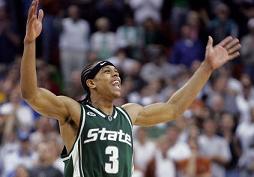
- Mo Ager. I love Spartans, as you can see. Perhaps I am inspired by the Battle of Thermopylae and the great King Leonidas, but I just love these swingmen from MSU. Ager isn't really a steal in the traditional sense, but given his perimeter defensive abilities, the Mavs may have landed a potential D-Wade Stopper. And we are all very aware of how important that would be.

- Alexander Johnson. I still have no idea how he fell to #45. Furthermore, I have no idea how two teams - Indiana and Portland - could watch him fall in their laps and then trade him. Amazing. I am 95% certain that this guy is going to be a starter in the league at some point.

- Guillermo Diaz. For weeks we heard that the Kings wanted him at 19 and when they went for the more prolific scorer in Quincy Douby (and the better name, albeit in a close call), Diaz went flying down the board. I think the Lakers would have taken him at 26, but they had to take Farmar when he dropped to them. That meant that the Clippers, who had no business getting any quality players without a first round pick, got Diaz and Paul Davis (another Spartan!). The odds of them getting an eventual starter from this draft are now actually pretty good. Which is shocking.

There you have it. Those are my initial thoughts. Look for the official report when Dritz and I grade every NBA team on their picks.

Five Impact Players for Next Year


1. Brandon Roy. He’s the most NBA-ready of the players in the draft. He actually measured even taller (6’6 ½”) and tested as more athletic than most expected at the recent combine. Roy is a complete player on both ends of the floor, can get to the hoop, shoot, handle the rock, and create shots for his teammates. He’ll contribute next year.

2. Shelden Williams. Williams isn’t the most athletic guy in the draft, but he’s a great rebounder and shotblocker, and he can score with his back to the basket. He’s benefited from playing in Coach K’s system for the past 4 years. He’ll be a solid player next year, and for the next 10 years, but don’t expect him to get too much better than he is now.

3. J.J. Redick. We can’t leave out Williams’ former Duke teammate and first-team All-American, Redick. Some knock his athleticism and ability to get his own shot, especially after he couldn’t knock anything down against LSU in the NCAA tourney. However, he is still a lights-out shooter, and as a role player in the NBA, he won’t have defenses focused on shutting him down. On the right team, one with a good post player and/or someone who can drive to the hoop and force the D to collapse, he’ll be able to make a career of knocking down kickout jumpers.

4. Adam Morrison. I’m not a huge Morrison fan. A big portion of his game revolves around creating space for his sweet jumper, but I have my doubts about whether or not he’ll be able to do this against many of the more athletic defenders in the NBA. Nonetheless, he’s a pretty good scorer, and will probably average around 12 points per game next year. In a shallow draft like this one, he’ll probably make one of the biggest impacts of anyone in his class.

5. LaMarcus Aldridge. I wanted to give this spot to Andrea Bargnani, who could really be something special. But Aldridge, who’s been knocked for not being strong enough, is still much stronger than Bargnani. Aldridge crashes the boards hard, runs the court well for a big man, and can score both facing the basket and with his back to it. His scoring at Texas was deceptively low due to the fact that he played with a number of ballhogs.

Adam’s Comments: First of all, Dritz, way to stretch yourself. All five of these guys are projected as top-eight picks, so those were some bold choices. (Voice dripping with sarcasm.) That said, I can see all these guys faring okay next year. Roy is my guy and as many of you know (if you religiously read and memorize the blog – and really, who doesn’t?), I have been touting him for Rookie if the Year since March. Not only is he a very skilled and mature player, but his name is spelled R-O-Y, which stands for … you know it.

I find it interesting that you give Redick a boost by virtue of the fact that defenses won’t focus on him as much in the pros, yet you don’t give Morrison the same benefit of the doubt. I guess it all depends on where they end up. If Morrison winds up in Portland (as anticipated due to the ongoing “Draft the Stache” campaign), he is indeed going to have to work extremely hard to get shots. Whereas if Redick goes to Houston like Chad Ford seems to think, he will be feasting on Yao and T-Mac kick-outs. I suppose I agree with you, but it really boils down to their respective situations.

As for my top five “immediate contributors,” I would include Roy and Aldridge (I think he’s quickly becoming the most underrated player in the draft, as he and Roy have basically traded places on most projections), as well as Randy Foye (Roy’s biggest challenger for ROY, depending on who drafts Foye), Marcus Williams, and Shannon Brown (my choice for the “Josh Howard Late-20’s Pick That Blows Up” Award).

Five Future Impact Players (3-5 Years)


1. Andrea Bargnani. This guy could make an impact in less than three years. Unlike most European players who are drafted young and raw, Bargnani is 20 and has been playing in one of Europe’s most competitive leagues for one of Europe’s most competitive teams, and playing well. At 7’0,” the obvious comparison is Dirk, and all reports are that Bargnani is the real deal. Along with a strong perimeter game, he boards pretty well, and gives good effort on D. Word is Raptors GM Bryan Colangelo is a big fan, and many predict Bargnani will be the first pick in the draft.

2. Tyrus Thomas. A freakish athlete at 6’9”, Thomas burst onto the scene with his dominant performance during the NCAA tournament. With his ability to run the court and fill up a stat sheet, many have compared him to Shawn Marion. Critics wonder if he might be the next Stromile Swift. Personally, I think a better comparison is to a shorter, “poor man’s Amare Stoudamire.” His athleticism and shot-blocking ability make him extremely disruptive on D, and he runs the court very well. His offensive game is raw, but at only 19, that can develop. Bulls GM John Paxson is said to be in love with Thomas at #2. One worry: with rookie contracts under the new CBA being only for three years, he’ll still be too raw at the end of his first contract for the team that drafts him to be able to tell whether or not he’s the next Marion or the next Swift. This will make it hard for someone to decide whether to re-sign him. But he has the ability to be the best player in this draft.

3. Randy Foye. Some have referred to Foye as a “poor man’s Dwayne Wade.” He’s athletic, but not as strong or explosive as Wade. He’s skilled enough to help out now, but some teams want him to learn to run the point. Give him a couple years to pick up the position, and with his basketball smarts, whoever drafts him will be pleased.

4. Rudy Gay. In the past, Gay would have been on my “overrated” list, due to his propensity to disappear during games and questions about his heart. However, after Charlie Villanueva showed me up for dogging him about those issues later, I’ll give Gay a shot. He is a long, strong, freakish athlete with a good jumper and ball skills. He can do pretty much everything on the court, when he wants to. If he matures, he probably has the most potential of anyone in this draft.

5. Joel Freeland. This 7-foot Brit star of the Reebok Eurocamp has only been playing basketball for three years. He’s very athletic, blocks shots, and plays high-energy D. Offensively his skills are developing rapidly, and he’s already getting a decent mid-range jumper. He could be a real steal at the beginning of the second round, but he’ll take at least 2-3 years to develop.

Adam’s Comments: First of all, British people can’t play basketball, so that Freeland guy is going to suck. As for your other choices, I see that you also like Foye but think he needs time to learn the point. Fair enough, although I personally think that in today’s NBA he can ball right away. You don’t need defined guards anymore as evidenced by Jason Terry, Leandro Barbosa and others who are “tweeners” yet still make huge impacts. I think if you can make defenses respect with your jumper, get by people with the dribble, and finish at the rim, you can destroy defenses. Does Foye fit the bill? Check, check, and check. So I think he contributes right away.

I believe that Gay is just as likely to be out of the league in five years as he is to be any good. I know The Seal (Charlie V) has you rethinking things, but I remember Villanueva putting forward pretty good effort. The questions about him were more centered on “will he get it?” He had concentration issues more than hustle problems. With Gay, he simply doesn’t seem to give a crap. My Dad calls him Darius Miles with a better jumper. Now, some people think that’s all Miles needs and would therefore take that as a compliment. Trust me, its not.

The guys that I think will be really good down the road after slow starts are Alexander Johnson (possible workout wonder, but more likely a legit player that is still learning how to use his new lean, mean frame), Mouhamed Saer Sene (supposedly he went from not being able to shoot a layup to being a physical specimen in one year – I think he’s going to be a better version of Diop, which suddenly isn’t too terrible), and Shawne Williams.

Five Overrated Players That Will be Drafted Too High

Five Overrated Players Who Will Be Drafted Too High

1. Patrick O’Bryant. His stock skyrocketed during Bradley’s improbable Sweet Sixteen run. At 7 feet, he’s seen as the best “pure center” in the draft, and I’ve heard some teams are considering him in the middle of the lottery. A good rebounder and decent athlete, he needs to bulk up. His offensive game is raw. I don’t see anything too special about him, but since centers are rare, he’ll get taken higher than his game warrants.

2. Marcus Williams. He’s a good player, but unspectacular. While he has good basketball IQ, he’s a subpar NBA athlete, which was on display at the combine. There are questions about his character due to off-the-court troubles and poor conditioning. Normally, I don’t think he’d be a lottery pick, but this year’s draft is very thin on point guards, so he’s crept up to the middle of the lottery. His status as “the best pure point guard in the draft” will get him chosen ahead of better players.

3. Rajon Rondo. I wanted to put Rondo in the “Players who should have stayed in school” category, but I really just haven’t seen his supposed “potential.” He’s immature, and got benched by Tubby Smith for part of last season. He’s quick, but he can’t shoot. Even his free throw percentage is bad (57% last season). Why would you use a lottery pick on a guard who can’t shoot?

4. Hilton Armstrong. I just don’t see anything special about Armstrong. He’s pretty athletic, and I guess at 6’11”, that’s all you need to get selected in the late lottery (as some have projected for Armstrong). He’s a good shot-blocker and plays hard, but his offensive game is very undeveloped, and he’s a liability when the ball is in his hands. I’m not a big fan of drafting someone mainly based on size.

5. Cedric Simmons. I’m always suspicious about guys you hear little to nothing about during the college season, but whose stock is suddenly high come draft time. Simmons is athletic and can block shots, but he’s not very strong and will get pushed around. His offensive game is pretty raw, and his ballhandling is questionable. Recent reports have him going as high as the late lottery. He’s too young, and won’t have developed yet (if he ever does) when his rookie contract is up.

Adam’s Comments. Simmons is a good call. I saw him work Sheldon Williams pretty good during the ACC season last year, but other than that, I don’t understand where all this heat is coming from. The latest reports say Boston is going to take him which makes no sense given that they already have Al Jefferson, who is a better version of Simmons. Odd. I obviously disagree with you about Marcus Williams but I’m on board with the rest. I recall rooting for Bradley to upset Kansas and being amazed whenever O’Bryant converted a hoop. Now he’s a lottery pick? What? Can you say “Next Michael Olowakandi”?

Seven Potential Sleepers


Seven Potential Sleepers

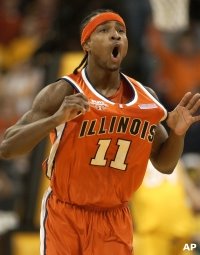
1. Dee Brown. I think I’m on the ever-shortening list of people who still like Brown. People worry about his size and abilities to run the point in a half-court offense. However, Brown will be the fastest guy on the court at all times, is a strong defender both on and off the ball, and has improved his jumper. This past season wasn’t a good one for Brown to show his NBA skills, as he had to be a lead scorer (not his forte) on a young squad. However, he’ll make a good substitute point guard. Phoenix should take a good look at him to back up Steve Nash and push the tempo, as Leandro Barbosa is likely to leave after this season.

2. Kevin Pittsnogle. If there’s room in the NBA for Matt Bonner as a 3-point shooting center, there’s room for Pittsnogle on someone’s bench.

3. Leon Powe. He was a big-time college player at Cal, and those are the guys I like. He’s athletic and skilled, and has an NBA body. He can score facing the basket and with his back to it. Scouts worry he’s not big enough to play the 4, since he’s only a hair taller than 6’7”. However, his 7’2” wingspan should alleviate those concerns. If Powe’s knee holds up, he’ll be a steal in the late first or early second round.

4. Quincy Douby. This guy can really fill up the hoop, averaging 25.4 points for Rutgers last season. He has a very, very sweet long-range jumper, and a pretty floater. He can provide offense off the bench for a team, or be a good supplemental scorer at the 2 position. He’s projected to go in the bottom of the first round, but with his ability to create his own shot, he might end up being better than Redick.

5. David Noel. He was a key contributor to the 2005 North Carolina national championship team that was one of the best college squads in recent history, and I think he can contribute in the NBA. I love guys who can play at big programs. He showed perhaps the most athleticism of any prospect at the combine, and is willing to do the dirty work. He doesn’t do anything exceptionally, but he’s just a basketball player, and he’ll be able to help out a team off the bench.

6 and 7. Mike Hall and Pops Mensah-Bonsu. Gotta show some love to my alma mater. These guys are both extraordinary athletes, and they can play some ball, too. Hall can hit the NBA 3 and lock up a good wing player on D. Pops is less skilled, but can jump out the gym and likes to bang down low. Both, but especially Hall, have potential to be contributors off the bench in the NBA.

Adam’s Comments. Get out of here with that GW stuff. Come on! (Best G.O.B. from “Arrested Development” voice.) I like the Powe call and would add a few more names to the list: Mo Ager (wildly underrated), Kyle Lowry (much better shooter than people realize – I contend that he’s already better than Devin Harris), Shannon Brown (as mentioned earlier), and Will Blalock (I also like Iowa State’s Curtis Stinson, but I’m not sure if he stayed in the draft and I’m too lazy to look it up.)

Five Players That Should Have Stayed in School


Five Players Who Should Have Stayed In School

1. Daniel Gibson. He was considered a likely lottery pick before the season, but appears to have regressed. He scores well, but can be turnover-prone and has trouble with pressure. He may not really be a point guard. Another year would have let him work on involving his teammates better. Now, he’s looking at being taken in the late first or early second round.

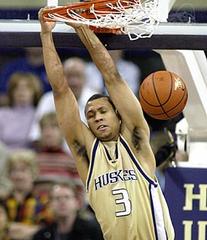
2. Darius Washington. His game is similar to Gibson’s, as are his questions. He has an NBA body and is a good scorer, but his assist-to-turnover ratio was about even, raising questions about his ability to run the point in the pros.

3. Josh Boone. He supposedly has all the physical tools, but I feel like he rarely showed them in his first three years at UConn. He could be a good shot-blocker and rebounder, but lacks an offensive game. Many wonder if he’s soft, especially after he got pushed around by Jai Lewis in the Elite Eight. Nonetheless, scouts feel like his potential would make him a solid first-rounder if he developed a bit at school over the next year. Instead, he’s staying in this draft, and is projected to go in the second round.

4. Guillermo Diaz. He’s an incredible athlete (noticing a theme in this year’s draft?) and a tough kid. However, he’s inexperienced and can be turnover-prone. Another year at Miami to shore up his ballhandling skills would have moved him up into the lottery.

5. Danilo Pinnock. He fits the GW mold of exceptional athleticism but possessing raw skills. He needs to develop offensively. Currently, he’s probably going undrafted, but if he’d stayed another year, he would’ve established himself as a solid second-rounder.

Adam’s Comments. I think there is more to the Darius Washington story than meets the eye. He was a stud at Memphis and by the Tourney, he was splitting time at the point with walk on Anthony Allen. I got some serious “ this sucks” vibes from Washington late in the season, so I think he was planning to go no matter what. I can’t imagine losing his job would have been good for his draft stock, so maybe he was wise to try now. I do think that Antoine Wright should stay in school. Oh wait, he’s been on New Jersey’s bench all year. (Sorry if that joke sounds familiar – I used it last year.)

Four Players to Look for in 2007 (and one in '08)


Dritz and I teamed up for our annual draft preview column, but something is amiss over at home base. I think all my editors are on vacation. So I am breaking it down by group and posting it here, just so we can point to somethin when all of our predictions come true. Here is the first of many:

Four Players to Look For in the 2007 Draft and One to Look For in the 2008 Draft

1. Greg Oden. I don’t need to say much about Oden. He’s the most heralded high school prospect since LeBron, and with good reason. I saw him play in person, and he’s just an absolute monster. Oden’s a legit 7 feet, runs the court well, blocks shots, hits the boards, and can hit 15-foot jumpers. His game is incredibly developed for a 18-year-old. Right now, he’s one of the top 10 centers in the world. He claims he wants to stay in college, but it’s hard to believe he’s going to be able to resist the lure of big money after a dominant college season next year.

2. Josh McRoberts. He considered entering the draft this year, but decided to hang around Duke and be “the Man” this season. He is very athletic and runs the court well for a big man. He’s strong and has an NBA body. Barring an injury, he’ll be a top-5 pick next year.

3. Joakim Noah. This son of a former tennis star might have been the #1 pick this year, but decided to return to Florida and try to defend their national title. At 6’10”, he runs the court faster than guards, and has the rare ability to take over a game with his defense and shot-blocking. His offensive game is developing rapidly. He probably should have come out this year, though, since his stock was so high. Another year in college, and scouts will start to find problems with his game (like his awkward-looking ballhandling).

4. Kevin Durant. He dominated the McDonald’s game with his play. He’s strong and has a very sweet shot for a 6’9” player with his athleticism. Word is he’s “one-and-done” at Texas. If so, he could be a top-five pick as well.

5. O.J. Mayo (2008 Draft). The Cincinnati prep star has drawn comparisons to Kobe Bryant with the completeness of his play. He can score at will, and fills up the stat sheets. Supposedly, he’s headed to Kansas State after this season to play for Bob Huggins, but he’s highly unlikely to stay for more than a year.

Adam’s Comments. For the life of me, I’ll never understand why Noah went back to school. I know he has plenty of money and loves campus life and all that, but seriously, what was he thinking? I see a Matt Leinart-like drop in his near future. I guess the moral of the story is this: “stay in school … unless you are going to be the #1 pick in a major professional sports draft.” The worst part about Noah’s decision is that he is going to cost teammates Al Horford and Corey Brewer some serious money. Everyone knows that 2008 is shaping up to be a far superior draft, so it is unlikely that any of the young Gators will retain their lofty projections once next spring rolls around. Even if they repeat (unlikely given all the luck required) they will still lose in the big picture. Noah will go from a possible #1 pick to probably the 6-10 range, Horford was looking at Shelden Williams’ spot in this draft (5-8) and will now probably fall out of the lottery, and Brewer was settling in at late lottery and will now most likely to drop into the 20’s. I’m telling you, this is a bigger deal than people realize.

Thursday, June 01, 2006

6-for-20


Game Five of the Eastern Conference Finals went to the home team Pistons, which kept their season alive a little longer. There were a few aspects of the game that could be deemed "factors" in the outcome, including: increased intensity by the Pistons (nice of Ben Wallace to show up for a game), a big performance from Tayshaun Prince, 14 Miami turnovers, a pretty average game for D-Wade, and the typical "call a bunch of fouls in the first quarter so the home team can get into the bonus and shoot free throws" move that the officials have perfected this postseason. However, none of those factors come close to the only real factor in tonight's game. And that would be ...

6-for-20.

That was Miami's shooting from the free throw line. From the free throw line.

Now, I have never taken a free throw in an NBA playoff game with 19,000 people screaming at me, but I have to believe I should shoot better than 30%. My buddy Josh Stump discussed this on his blog while calling out Hubie Brown for shedding tears on behalf of Ben "The Living, Breathing Missed Free Throw" Wallace. And he's got it exactly right. How do you miss more than half of your free throws? In this case, how do you miss more than two-thirds of them!

You would think with this kind of masonry going on, that the Hack-a-Shaq was in effect. Not really. Sure, Shaq was a grisly 1-for-5 from the line, but that still leaves a 5-for-15 work of art for the rest of the team to lay claim to. For the love of James Naismith, how did this happen?

Part of the problem is that Miami lacks great shooters. Everyone knows this, but because Wade is so sick and Shaq so powerful, Miami wins a lot of games even without reliable shooters. Plus, they have a couple of streaky players that can get hot and hit some threes in 'Toine, Posey, and Jason Williams. However, take a look at their roster and find me someone that could beat Jeff Morrow in a three-point shootout. Okay, 99% of you don't know who Jeff Morrow is, but think of your buddy with the sweet jumper and insert him into the argument. Face it, Miami has plenty of good players but not a whole lot of good shooters. Wade is probably the only guy I'd consider a good shooter and he's usually pretty solid from the line and from inside the three-point arc, but even he is more scorer than shooter. And when you aren't a shooter, you have nights where you lose the feel (Steve Kerr did a great job of discussing this the other night, while talking about Leandro Barbosa). And when the whole team is comprised of shaky shooters, you might just have a night where everybody loses the feel all at once. And then it is: "Goodness sakes alive, watch your face!" (Since I cited my man Stump's blog, I felt obligated to throw a Bill Walton quote in there. Because he loves him.)

Another problem for Miami is that different players kept getting fouled. To me, free throw shooting - really any kind of shooting - is kind of like hitting a baseball. The more attempts you get, the better off you are. I remember in the NCAA Tournament, the incredibly insane and grouchy Billy Packer got absolutely fixated on the low free throw shooting percentage of Florida's sharpshooting guard Lee Humphrey. He kept mentioning Humphrey's 44% shooting for the year and offering all kinds of crazy suggestions for improvement (including my favorite: moving back to 19 feet and shooting a jumper, which apparently was supposed to be some sort of cross between Nick Van Exel and a three-point shootout). What Packer failed to notice as that Humphrey had only taken 22 attempts all year. So here was Packer, rambling on and on about Humphrey's inability to shoot free throws, meanwhile the kid finally gets a few attempts in bulk and he goes like 8-for-9 in the national semis. To go back to the baseball analogy, it is like comparing an everyday player to a pinch hitter. In almost every case, the everyday guy will have the better batting average. Part of this is probably because the everyday guy is better to start with (that is why he's playing everyday), but the other part is that you need volume attempts to produce. It takes a special type of player to get off the bench to hit once every two games. I think this applies to shooting, particularly free throws. I know that I can knock down 10, 20, maybe 30 free throws in a row standing by myself in a gym. I also know that if I get 10 free throws in an actual game (we're talking college intramurals and city leagues here, of course), I am probably going to make eight or nine. However, if I get fouled just one time? If I'm being honest, I probably go 1-for-2. Maybe not, but the point is that if you can get one trip out of the way and get the feel, the rest is gravy. For Miami, the only guys to get more than three attempts were their centers, Shaq and Zo. Not good. Wade converted an "and one" but missed twice when he finally got to the line late in the game. Haslem had a rough trip where he missed two and then he shanked another one later in the game. Payton threw up a pair of bricks. I am 100% certain that if Wade got eight attempts, he would have made five or six. If Payton got another trip to the line, he probably would have made both of them. But when you only get to the line once the whole game, it is a crap shoot.

I could go on, but there is no point in beating a dead horse here. The simple fact is that Miami lost this game at the free throw line. They didn't get a lot of calls to begin with and when they did win a trip to the line, they just gave it away. Miami is never going to be a great free throw shooting team (as evidenced by their percentages in the first four games: 67%, 67%, 87%, 60%), but they can't expect to win if they shoot under 50% from the stripe.

Game Six may very well boil down to the most elementary play in basketball: making unguarded shots from 15 feet away.

Amazing.

What?


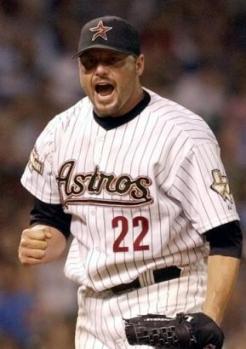
Forgive the vague title, but that was the only way I could take all of the lunacy surrounding this Roger Clemens signing and put it into one word.

Let's put aside the fact that Clemens is one of the greatest pitchers of all time, or that he's nothing but a hired gun (and has been for a long time), or that he has retired and unretired more than Jordan and George Foreman combined. Instead, let's focus on the national sports media's reaction to Houston signing Clemens. There are articles ranging from shockingly derisive (Yahoo columnist Jeff Passan calling Clemens either a "liar" or "delusional") to snarky and dismissive (the normally solid Tom Verducci writing them off) and many of them seem to be focusing on one thing: Clemens said that this choice was all about winning, yet the Astros can't win.

So I ask again ... what?

For starters (pun totally intended), Houston won't be the same team going forward with Clemens that they were without him. Not only did he lead the majors in ERA last year, but his work ethic and leadership were invaluable for the other Houston pitchers. I fully expect Andy Pettitte to pitch better and for Brad Backe to come back from the DL stronger and for the bullpen to make tremendous strides. Bringing Clemens back is like adding a #1 starter and a pitching coach at the same time. I think he's good for an extra five wins just by being on the team, and another five or six by virtue of him pitching instead of somebody crappy. I know they are scuffling along right now, but those 10-12 wins are going to come in handy.

Not only that, but what sane person would count the Astros out with or without Clemens? Everyone is saying that he should have gone to Boston or New York or even Texas if he really wanted to win, and that the fact that he returned to Houston is proof that he only did it for family reasons. Now, I will be the first to admit that Boston and New York are good places to go if you want to win, but since when did Houston turn into a doormat? Isn't this the same team that played in the World Series last year?

But wait, they are only 27-27 right now and since Houston is always defined by what they do in April and May, the season is pretty much over. Wrong. Forgive the sarcastic tone, but isn't this the same team that came out of nowhere to make the playoffs in each of the past two seasons? In 2004 the Astros were dead in the water, sitting on a 52-52 record at the end of July. All they did was bring in manager Phil Garner and outfielder Carlos Beltran and tear off a 40-18 record down the stretch to finish with 92 wins, the wild card, and a trip to the NLCS.

In 2005, Houston - sans Beltran - struggled once again, going an abysmal 15-30 through the first two months of the season. A 29-13 run heading into the All-Star Break (leaving them 44-43 at that point) prompted me to write a column predicting that the "Never Say Die" Astros would go on to win the NL Wild Card again. And they did, again. They went 45-30 in the second half, which gave them an overall record of 74-43 after the terrible start. Oh, and did I mention that they parlayed that wild card spot into the first World Series appearance in franchise history?

Just for argument's sake, here are the Astros records in '04 and '05 at the 54 game mark:
2004: 29-25
2005: 20-34

That means that their record and winning percentage in the remaining 108 games looks like this:
2004: 63-45 (.583)
2005: 69-39 (.639)

For a reasonable idea of how the 'Stros might play their final 108 games this season, I decided to just take the average between 2004 and 2005, which gives us a winning percentage of .611. Playing at a .611 clip for the next 108 games would result in a record of 66-42 over that time. Add that to their current record and you get a 93-69 team.

And Roger Clemens is a "liar" because he wants to play for a winner? He's "delusional"? Just for the record, I should add that with Houston reasonably expecting to finish with a .574 winning percentage, they are looking pretty good. In fact, other than the division leaders, there isn't a single NL team currently playing at that clip. Who is going to beat out Houston for the Wild Card? Atlanta (currently at .528)? Cincinnati? One of the NL West imposters? Give me a break.

I'm not saying that Houston is automatically going to win the World Series with Roger Clemens. I do think he'll help them have a better chance, but that isn't what this is about. The point is that the Astros have come racing from the back of the pack in two consecutive seasons, yet a large contingent of "experts" are writing them off merely because they are 7 games behind the Cardinals. Does this make any sense at all?

If you ask me, Roger Clemens is 100% right when he says this decision was about winning. He knows the Rangers are unlikely to keep playing this well and that the Angels won't stay bad forever. He also knows that with so many solid teams tearing it up in the AL Central, there is a good chance that whoever loses the AL East race between the Sox and the Yanks is staying home this season. If he guesses wrong, no postseason. However, with the Astros, he can feel pretty confident they are going to win the Wild Card. Factoring in the quality of the teams that look to make up the field and the track record of the 'Stros, it was practically a no-brainer. Not only that, but the Astros are the only team in that group that isn't winning right now. If he joins the Rangers and they don't hang on to the AL West, how would that look? How about if he signed on with Boston or New York and the other team won the AL East? Not a real good situation for The Rocket. But in Houston, it is win-win. If the Astros pull off another comeback, this time it is Clemens that serves as the lightening rod (like Gardner/Beltran in '04 and the return of Berkman last year).

I don't like Clemens all that much, but when he says this decision was about winning, I believe him. Because he did the same math I did and he's not an idiot. Which is more than I can see for the guys writing some of these columns.

Wednesday, May 31, 2006

The Downfall of the Pistons: Much Ado About Nothing


Let's all just calm down
about the "Detroit Dynasty"
Tonight the Miami Heat travel to Detroit, looking to close out the Pistons in the Eastern Conference Finals. To hear the media tell it, this is an upset of epic proportions. A shocking turn of events. A monumental story. To the average pundit, expert, and fan, we are on the verge of seeing the “mighty” Pistons eliminated from the playoffs. Fire up the word processor!

Stories are flying left and right as people scramble for an explanation. Detroit is too reliant on its offense this year. The players are giving up on the coach. Flip Saunders can’t coach in the playoffs. They got too cocky. They are worn out from three years of extended seasons. On and on it goes.

How about this for an explanation: the Detroit Pistons were never as good as you thought they were.

If you take a snapshot of the last three years, “Deeeeeee-troit Bas-ket-ball!” looks pretty good. A title, followed by an NBA Finals appearance, topped off with a franchise record 64 wins in the 2005-2006 regular season and a trip to the Eastern Conference Finals. It’s not a dynasty or anything, but it is a nice run all the same. It is the type of run that says, “this is a very good, maybe great, team.” Again, that is the snapshot.

A closer look reveals something else entirely. Rather than give you the punch line, let me walk you through all of Detroit’s success from the past three seasons.

2004 – This was the title run. The year of “play the right way” and the midseason acquisition of Rasheed Wallace that somehow gave Joe Dumars a lifetime free pass for taking Darko ahead of Dwyane Wade, Carmelo Anthony, and Chris Bosh. The snapshot reveals a mighty Detroit team that vanquished the Lakers in five games in the NBA Finals. Not so fast. For starters, Detroit reached the Finals by coming out of an Eastern Conference that still had an “L” in its name, for “Leastern.” And winning an inferior conference wasn’t exactly a walk in the park. It took a miraculous block by Tayshaun Prince to beat an arguably superior Indiana team in the semis, and Detroit needed a Jason Kidd knee injury to get past New Jersey in the conference finals. Nobody remembers this now, but New Jersey was up 3-2 in that series and had a close-out game at home, when all of a sudden, Kidd could hardly walk. Detroit moves on. And who do they face? None other than the Kings of Dysfunction, the Los Angeles Lakers. It was a miracle that L.A. even made it to the Finals that year, since both the Spurs and the Wolves were better teams. However, Derek Fisher hit that miraculous bank shot against San Antonio (which led to a complete meltdown by Tim Duncan – a collapse that for some reason is never discussed when people talk about his career) and Sam Cassell got hurt in the Western Conference Finals, so the Lakers prevailed. However, along the way, L.A. lost the heart and soul of that team, Karl Malone. And with him they lost all hope of beating any competent team in the Finals. So Detroit won a championship. Give them credit, because they looked really good doing it, but just know that they had Lady Luck on their side throughout those playoffs.

2005 – Detroit makes it back the Finals, where they lose to the Spurs because of a mental mistake by Rasheed Wallace. This one shouldn’t take as long. Basically, they won the East (and almost a second consecutive title) because Dwayne Wade – who was treating the Pistons like a high school team – suffered a mysterious rib injury. It is as simple as that.

2006 – The Pistons bring in an offensive-minded coach to replace Larry Brown and they rattle off 64 wins. I think this is where things started getting blown out of proportion. The tremendous regular season success, coupled with the postseason success of the past two years, led people to believe that this was some sort of unstoppable force. In reality, it was a collection of hard working players that fit well together and played their best when the chips were down. If anything, the Pistons had overachieved enormously over the past three seasons. If the East was as good as advertised this season, Detroit probably wins 58 games and nobody thinks of them as a “great” team. If even one Piston starter suffers even one minor injury, they probably win 58 games. And we already know how easily things could have turned out differently in the 2004 and 2005 Playoffs.

What I’m saying is that with a few bad bounces (or even just the absence of a few good bounces) here or there, this could be a team that never made it further than the Eastern Conference Finals. And instead of wringing our hands at the downfall of a mini-dynasty, we would just be shrugging our shoulders and saying, “This makes sense, with Wade and Shaq healthy and playing well, Miami is a much better team.”

I’m not here to write the Pistons off as nothing but a lucky team, nor am I trying to downplay the egregious way that many Detroit players are handling themselves right now (these guys are acting like participants on “The Apprentice” – busy pointing crooked fingers and laying blame in the event of a loss, rather than putting all their effort into winning). What I am saying is that we might have a “much ado about nothing” situation on our hands. Because when you look at the big picture, here is what you get:

An overachieving team that usually plays well in big moments isn’t playing very well this time around, and for the first time in the last three years, they are playing a healthy team in the Eastern Conference Finals. It isn’t going well.

This is a huge story? If you say so.

Xenophobia!


According to Webster’s Dictionary, the word xenophobia means, “Hatred of strangers or foreigners, or that which is foreign.” Does that bring to mind anything in particular? How about an ongoing sporting event that is being televised by ABC, ESPN, and TNT? In case you are still in the dark, I am speaking of the NBA Playoffs.

Now, obviously, I am having a little fun here with a tool I like to call “exaggeration,” but I can’t help but feel like a common thread in this year’s postseason has been the fact that foreign players are getting absolutely hosed by NBA referees.

I touched on this in a recent post (and in the ensuing comments), but officiating in the NBA is a very difficult task. The players are big and athletic and the game is played at such a high speed that it is almost impossible to keep track of everything happening on the court. That said, the refs are having a rough postseason. There have been some blatant missed calls in crucial moments, some terribly one-sided games, and a bizarre propensity to keep home teams close on the scoreboard (by calling ludicrous off-the-ball fouls) when they come out playing like crap in the first quarter.

To put it bluntly, nobody is happy with the officiating. Every time someone lost in the Dallas-San Antonio series, the officials were blamed for the outcome. The Pistons are collectively acting as if the entire sport is rigged against them. On almost any play, you can expect someone to complain, and on pretty much every third play, the complaining party has a seemingly valid point. All of that said, nobody seems to be getting it as bad or as consistently as the contingent of foreign stars.

Here are some names of international players who have had important roles in the 2006 Postseason (Tim Duncan doesn’t count – after all, he played on the U.S. team in the 2004 Olympics): Steve Nash, Dirk Nowitzki, Manu Ginobili, Boris Diaw, Tony Parker, Vladimir Radmonovich, Pau Gasol, Desagna Diop, Zydrunas Ilgauskas, Anderson Varejao, Nenad Krstic, Andrew Bogut, and Andres Nocioni.

While some of these guys were in and out of the playoffs so quickly (Gasol comes to mind) that they don’t really factor in, other names on the list read like a who’s who of bad call victims.

Ilgauskas and Varejao rarely seemed to draw a favorable whistle against the Pistons (with the exception of Varejao’s offensive goaltending that was allowed). Diop was being whistled for fouls against Tim Duncan while he was still in his hotel room. Parker and Ginobili didn’t get nearly the usual amount of love they’ve come to expect from the refs. Nash was railroaded in that infamous Game Four against the Lakers when he the officials didn’t give him a timeout (or a foul). In fact, other than Diaw, nobody on this list has had much luck getting beneficial calls at all.

The king of this cast of characters is Dirk Nowitzki. He’s been so good in the postseason that you can make a case that he’s the best player in the NBA right now, yet he gets very few “superstar calls.” Not only that, he doesn’t even get all that many of the regular calls. Other than the cheap foul he picked up on Bruce Bowen in Game Four of the Mavs-Spurs series, I can’t recall Nowitzki getting the benefit of the doubt on a close call. Tonight in Game Four of the Western Conference Finals, the ongoing slight reached epic proportions. Nowitzki drove the lane and got hacked … no call. He posted up and got mugged … no call. He gets bumped in transition … he gets called for the foul. It was amazing. There were at least three instances in which Dirk took the ball to the basket – as everyone has implored him to do – absorbed a tremendous amount of contact and got nothing for this troubles. It was reminiscent of Chris Webber’s days with the Kings, when critics would lambaste him for not attacking the rim, yet every time he did, the refs looked the other way while defenders reigned blows down upon his head. I don’t blame Dirk for wanting to take jumpers, just like I didn’t blame Webber then. If you can’t get the calls, why subject yourself to the fouls?

I’m obviously kidding about the refs having it out for foreign players. It is just ironic that in a postseason full of bad officiating, the international stars seem to be bearing the brunt of it. Hopefully this odd coincidence will end and Dirk will start getting the calls he deserves, before he decides to brandish that enormous mouthpiece of his as a weapon, ala Udonis Haslem.

I should also point out that it wasn’t the officiating that cost Dirk and the Mavs in Game Four. The Suns simply found their rhythm and outplayed Dallas to even the series. They got a boost from Bell (although I don’t believe he was entirely responsible for the Suns’ turnaround, as the TNT gang would have you believe), a stellar performance from Barbosa (again, I disagree with the Inside the NBA guys, because I don’t think Barbosa has to come off the bench to play well – just track down a tape of Game Six, Lakers-Suns, if you don’t believe me), and some timely threes. Plus, Phoenix benefited from a woeful performance by the Mavs.

All of that said, a case can be made that the international players that have served to boost the NBA’s global popularity and that have helped raise the level of play so much are now getting the short end of the stick in the all-important game of “who gets the calls?” that has so much bearing on the outcome of NBA Playoff games.

Any conspiracy theorists out there want to take up this cause?

Tuesday, May 30, 2006

Superman Returns


Game Three of the Pistons-Heat series was significant for a variety of reasons: Miami took a 2-1 lead in the series (a lead that would swell to 3-1 two nights later), Chauncey Billups regressed into a former version of himself that Boston Celtics fans would recognize (read: a point guard that dribbles for the entire shot clock every time down the court), Antoine Walker beat Rasheed Wallace off the dribble approximately 712 times, and – most importantly, the Real Dwyane Wade returned to the forefront.

Let me clarify something before I go any further. D-Wade has been great in the 2006 Postseason. His efficient performance in Game One against Detroit was an instructional video on “how to overcome foul trouble.” He had several performances against New Jersey that were terrific. However, for the bulk of the 2006 playoffs, Wade has been teasing us. He’s had moments here and there where he shown glimpses of the Superhero that was born in the 2005 postseason. You remember that guy, right? The one that elevated his game to near Jordan levels and launched conversations about the 2003 Draft Revisited (the favorite argument was: “Who would you take number one now? Wade or LeBron?). Many pundits and publications anointed Wade as the “best player in the NBA” in last year’s Eastern Conference Finals, and while that might have been the result of getting caught up in the moment, it sure wasn’t very far off either.

Then Wade mysteriously hurt his rib, the Pistons backed their way into another NBA Finals (you can read the column I wrote about this last year for more information), and everyone quickly forgot about Wade’s incredible run. In fact, other than a brief flurry of MVP talk this season, Wade was largely ignored despite posting monster numbers and emerging as one of the best players in the world. But that is the way of modern sports – out of sight, out of mind. The Heat weren’t much of a story this year (an obvious contender that slowly played its way into shape), so Wade was bypassed for grander tales such as LeBron’s ascension (understandable), Elton Brand and the Clippers turning things around, Kobe scoring like a madman, Nash and the Suns staying afloat without Amare, Dirk and the Mavs becoming elite, and Billups and the Pistons taking a run at 70 wins. Nobody gave Wade much thought at all.

Obviously, the playoffs are the time when all of that changes. No longer does the media control the storylines, but rather the storylines control the media. If the Pistons squeak past the Cavs, they have to write about how “resilient” Detroit is. If the Nets get blown out by the Heat, there go all of your “nobody wants to play the Nets” stories (the dumbest ESPN the Magazine cover of all time). That is what I love about the postseason – all that matters is what happens on the court. Everyone sees pretty much every game, so you can’t spin things to your liking. You just have to say it like it is.

That’s why I was excited for Wade to offer up his own version of “Superman Returns” this summer. He’s been overlooked this year despite being one of the two or three most exciting players in the game. Heck, he’s one of the two or three best players in the game. And I knew the playoffs would prove that. The stage was set. Cue the John Williams score!

The only problem is that Wade struggled out of the gate. He looked sluggish and out of sorts against the Bulls. He seemed to be picking his spots for the first few games against the Nets. He was foul and turnover plagued in the first two games of the Pistons series. What was the problem? Was he hurt? Is Riley so focused on going to Shaq that Wade’s game is suffering? It wasn’t as if D-Wade was playing poorly – far from it. However, his brilliance was coming in spurts, as if he couldn’t sustain one of those masterpiece performances that we’ve come to expect from him.

Then there was Game Three. He attacked the rim early, scoring easy baskets and setting up Shaq for dunks. He pulled up and hit jumpers. He got to the free throw line. He picked up a crucial “and one” in the second quarter that got the crowd into a frenzy (for a Miami crowd, at least). And then in the second half, he kept up the pace. Even after he missed two big free throws in the fourth quarter, it didn’t seem to faze him as he was right back at it, tormenting the Pistons as he closed them out in style. All told, he finished with 35 points, 8 boards, 4 assists, and 2 steals while going 9-for-11 from the line and an astounding 13-for-17 from the field. It was vintage Wade. The type of game that sticks with you and makes you aware that you are watching greatness unfold on your television screen. An MJ game. A Superman game.

Two nights later he did it again. Jumpers in transition, forays into the paint that left the Pistons defense tattered and torn, a steady march to the free throw line. Throw in the best defense I’ve ever seen Wade play and it was a masterpiece. Even when he disappeared (on offense – his defense was still fantastic) in the third quarter, it just felt like he was biding his time for a frenzied finish. It still felt like he was controlling the game. Then “The Drive” (can we call it that?) when he glided down the lane, absorbed a hit from McDyess (who is going to kill somebody one of these days with those faux charge attempts where he slides under an airborne player), and somehow slung the ball over his shoulder, off the glass, and through the basket. Moments later, with the shot clock about to expire and Rip Hamilton draped over him like a track suit, Wade fired from 22 feet … nothing but net. Game over. He finished with 31, 6, and 5 with 2 steals, 2 blocks, and only 2 turnovers. He shot an almost unbelievable 8-for-11 from the field. He held Hamilton to a measly 11 points. His numbers have been better, but I’m not sure Wade has ever had a better game.

Yes, Superman has returned.

The only remaining question is: what is Wade’s kryptonite? Personally, I think that he’s been banged up and that his wrist never quite healed this year. And I think that Miami is being more intentional about feeding Shaq, which is taking away some of the flow from Wade’s game. I don’t think there is anyone in the league that can stop him. That said, I think there may be a little bit of kryptonite out there. The only players that seem to give him any trouble whatsoever are smaller guards that play low to the ground.

In the Chicago series, Wade had a couple of rough nights. Most attributed this to the pressure of playing in his hometown, but I think it had more to do with Kirk Hinrich’s defense. Hinrich might be the best guy in the league at guarding D-Wade. He is tough, relentless, quicker than people realize, and he plays very low to the ground. He’s also a smart player and is adept at funneling Wade toward help defense rather than trying to guard him straight up. This is really the only way you can even hope to guard him and Hinrich does it flawlessly.

The interesting thing about the Detroit series is that for two consecutive years, a healthy D-Wade has treated the Pistons like a practice squad. He does whatever he wants, whenever he wants against them. Ironically, Detroit has their own version of Hinrich in Lindsay Hunter. He is smaller and older than the Bulls’ guard (and certainly not as good in any way, shape, or form), but he is a step quicker and has mastered the art of using his chest and drawing charges. In Game One, Hunter had a stretch where he picked up a charge, nearly picked up a second charge, and grabbed a steal. In Game Two he forced Wade into a variety of turnovers. Then in Game Three he was inserted into the lineup and you could see the wheels turning in Wade’s mind. It was as if he said, “Okay, no charging fouls this time, I am just going to shoot over this little guy.” So he pulled up and hit a jumper from the deep corner. Then he stopped in transition and hit a 19-footer. And then Flip Saunders gave up and put Hamilton back on Wade. Big mistake. For the life of me, I couldn’t figure out why Saunders did this. Yes, Wade hit two jumpers, but wouldn’t you rather take your chances there than let him get to the rim? It makes no sense.

In Game Four, Saunders went with Hunter for longer stretches, but Wade simply shot over him, took him to the block and spun away (to eliminate the chance that Hunter could flop and draw a charge), and went backdoor for alley-oops. Hunter didn’t have a chance. And you know what? Hinrich wouldn’t have had a chance either. Nobody would have. Not against a guy playing perfectly in every aspect of the game.

What does it all mean? It means that Superman is here to stay and that there may be no kryptonite. And it might just mean that LeBron is going to have a fight on his hands for the title of “best player in the game” for the next decade. Yes, Wade is that good. And he’s back. All the way back.

Monday, May 29, 2006

A Man for All Homers


There are a lot of ways that Byung-Hyun Kim might have been remembered. He came into the majors from Korea at a time when Asian players were first experiencing widespread success, so he might have been remembered as part of that particular migration of talent. His throwing motion was unique and could have been a fond recollection for baseball fans. Kim's prodigious strikeout totals rivaled those of Billy Wagner and could have led to him being remembered as an inconsistent K specialist. These were all possibilities, but that’s not the way that it worked out.

Instead, Kim is going to go down as a pitcher who gave up more than his fair share of huge home runs. He’s turned out to be “A Man for All Homers.”

Now, there are plenty of pitchers that have gone down in the annals of baseball history for giving up the long ball. Some are known for giving up crushing game-winners (see: Mitch Williams giving up the Joe Carter home run) and others are known for serving up a milestone shot (see: Al Downing allowing Hank Aaron’s 715th homer). What makes Kim unique is that he is a member of both clubs.

Here are the memorable bombs that Kim has given up in his seven-year career:

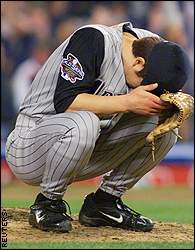
The Tino Home Run. Let me set the scene: It is Game Four of the World Series and the Diamondbacks lead the Yankees by a score of 3-1 at The Stadium. A win puts Arizona up three games to one in the series and virtually slams the door on New York. Curt Schilling gives way to closer Byung-Hyun Kim, who gets through the eighth before serving up a two-run, two-out homer to Tino Martinez in the bottom of the ninth inning. Yankee Stadium goes crazy. Kim immediately joins the Mitch Williams Club and looks on from the mound, completely stunned.

The Jeter Home Run. Many of you already know that this blast came in the same game as the previous entry. For some reason, Bob Brenly left Kim in the game despite the fact that his closer had already thrown more than a full inning, and Kim rewarded this horrendous decision by promptly giving up a leadoff blast to Jeter that won the game for the Yankees and nearly caused Yankee Stadium to spontaneously combust.

The Brosius Home Run. This was probably the worst of the three World Series blasts that Kim allowed, because it was the number nine hitter in the order (classic Yankees, by the way, in the spirit of Bucky “F’ing” Dent and Aaron “F’ing” Boone). In case you forgot this moment, here it is again: The Diamondbacks somehow pull themselves together after the horrible Game Four loss and they ride Miguel Batista to a two-run lead in the ninth inning. Once again, Brenly goes to his frail, frightened (and now overworked) closer. Kim proceeds to give up another two-out, game-tying blast to Scott Brosius. The earth actually shakes, if just for a moment. The Yankees go on to win the game and seemingly take control of the series before Randy Johnson and Curt Schilling bail Kim out by prevailing in the desert. (This was probably the best World Series I've ever seen, by the way.)

The WBC Home Run. Just to prove that he could give up big home runs in all situations, Kim allowed a two-run home run to Japan’s Kosuke Fukudome in the seventh inning of the semifinals of the World Baseball Classic, leading to Korea’s elimination from the tournament. If this feels like a letdown after the World Series blasts, I suggest you talk to some of Kim's countrymen and see how they feel.

Barry Bond’s 715th Home Run. Unless you have been under a rock for the past few days, you know that Bonds hit his controversial 715th home run on Saturday. There are a lot of interesting things about this blast – both good and bad – but to me, nothing is more amazing than the fact that Kim was the guy who gave it up. This was a home run that could best be described as “inevitable” and that was weeks in the offing, so what are the odds that good old Byung-Hyun would be the guy to finally serve it up? Had I known he was toeing the mound for the Rockies on Saturday, I would have made a beeline for Vegas and put down everything I had. This is just too ironic and too classic for words.

Ultimately, that is what I will remember about Bonds finally passing Ruth. Not that he smashed one to the deepest part of the park, not that the fans were incredibly excited about the moment, and not that the homer occurred under the “cloud of steroids.” No, what I will remember is that when the sports world needed this to be done and over with, when we all just needed Bonds to hit 715 and get it behind him, we absolutely had the right guy for the job. We had Byung-Hyun Kim, “A Man for All Homers,” on the mound.

Poor bastard.

Wednesday, May 24, 2006

Wednesday Night Delight


I think I am going to start giving the blog entries the kind of titles they use on ESPN. A pun probably would have been better, but "Wednesday Night Delight" sounds pretty Worldwide Leader-esque. Also, it perfectly describes the opener of the Mavs-Suns series. I mean honestly, does it get any better than this for basketball fans? Two teams running and gunning, playing like its the 1960's again, employing small ball lineups, and featuring skilled players at nearly every position. I can't believe that this is the Western Conference Finals. I am in heaven.

Here are my thoughts on Game One:

- Steve Nash might have had his best game of the season on the offensive end. He tallied 16 assists in a very quiet manner while keeping his team in the game. Normally, his passes are long dimes to three point shooters, so you notice every single assist he racks up. Tonight, a lot of his dimes came via post entry passes to Boris Diaw, so the passing clinic was more subtle. However, it was no less effective. Nash is so smart at picking defenses apart that he would just patiently wait (ala 50 Cent - gotta get my obligatory 50 reference in) for the Mavs to switch, then he would feed Diaw and put Boris in a perfect position to abuse the Dallas point guard underneath. Nash might not have been throwing lefthanded bounce passes through traffic, but he played point guard about as well as you can tonight. And when you factor in his two huge scoring runs (the second quarter and the last three minutes), he had a pretty much flawless offensive night. As for defense, that is another story. In fact, I am going to post an entirely separate entry on this.

- It goes without saying, but Diaw is a terrific player. It became obvious early in the season that he was much better than anyone realized and that his passing skills were going to make Phoenix really good, but in the postseason he has really expanded his ability to finish around the rim. He really impressed me against the Lakers and then of course had the huge game tonight. He's also quietly become a much better free throw shooter, which is enabling him to take the ball hard to the basket without fear. He shot 66% during the first month of the season, 71% before the All-Star break, 76% after the break, and now is dropping freebies at a 78% rate in the playoffs.

- I really hope injuries don't ruin this series. Josh Howard is arguably the fourth best player on the floor and he just missed pretty much the whole game with a sprained ankle. Raja Bell looked like he got shot by a sniper when he went down clutching his calf and I have the feeling that he might be down for a few games. Even Shawn Marion was limping around for the fourth quarter after rolling his ankle. These teams have the chance to throw up 125-120 type games every night, and if that gets negated because of injuries, we are all getting ripped off. It is ironic though that such a free-flowing game was also a war of attrition right out of the gates.

- As a fan who hopes to see this go seven games with about 1,500 total points scored in the series, I was glad to see the Suns win the first game. Had Dallas won, I think they would have taken the series with relative ease. Now I think we are in for a great battle.

- I plan on writing an entire column about this, but Dirk has taken his game up to that supreme level that I like to call "the crazy next level" (thanks to Dax Shepard for that one). In the NBA there are tons of stars and it is always tricky to pinpoint exactly what takes a player to the "superstar" level. It could just be as simple as winning, but I think there are more layers than that. I mean, how do we know that Dwayne Wade is better than Gilbert Arenas? The numbers are very similar and they are both sick, yet I think everyone would agree that Wade is in another class. The NBA is probably the only sport like this, where the difference between being great and one of the three or four best players in the world is almost impossible to measure. You just know when you see it happening. Anyway, Dirk is now at that level. Between the offensive rebounding, the automatic free throw shooting, the leadership, and the devastating mid-post game that he's developed to go with his transition jump shot, he's just killing people. I think Dallas needs to be more intentional about running the offense through Dirk in Game Two, so that when they need him to make shots to close out the game, he is in a good rhythm.

Tuesday, May 23, 2006

The NBA's All-Hands (Raised) Team


I'm having a Deja Vu moment. I feel like I already wrote about this last year, but I can't find any record of it, so I am proceeding. In the previous post, I alluded to what has become my biggest pet peeve in this year's playoffs ... the propensity for officials to take control of an early blowout and keep a team in the game. Right on the heels of that disturbing trend is another, equally annoying phenomenon sweeping NBA Nation: the "arms raised in disbelief" complaint to the official.

Before I write another word, let me issue a few disclaimers: 1) The officials are so bad in the NBA that they deserve all of the mocking and complaining that comes their way. 2) When I played sports, I tend to be a big whiner, so this is definitely me being hypocritical. 3) I am okay with most forms of complaining. The sneer (a Billups specialty), the hands on the hips with the incredulous smile (T-Mac's forte), the hands on the ref's hips (Cassell), and fierce point, the mouthpiece throw, and the stalking-while-going-into-a-timeout are all very acceptable forms of showing one's disdain for a call. The one thing I can't handle is the outstretched arms. The look of disbelief. The near tears. The freaking stopping in the middle of the play to go beg to the ref. Seriously, what is going on? I am about to give you my All-Star team for this particular move, but in reality, half the guys in the league could make the team. I'm forced to find serial arm-raisers and guys that constantly perform the arm raise despite getting almost every call, just to separate them from the average babies. It's an epidemic. A pandemic! (I forget - what is the difference?) Anyway, here is the NBA's All-Hands (Raised) Team (only players from playoff teams are eligible):

PG - Shaun Livingston. He's young, so I expect him to get even better at this. He gets bonus points for getting up probably 5-7 ARPG (arms raised per game) despite limited minutes of the bench. Plus, he has really long arms, so it makes for an even more dramatic moment (call it the Tayshaun Factor). Livingston's backup is Steve Nash who doesn't complain all that often, but when he does, never fails to look like a third grader that got his milk money stolen as he races after the refs with his arms raised in disbelief. (In Nash's defense, he keeps playing while doing so, unlike most of the guys on this list.) Gary Payton - a former first teamer - comes in a distant third.

SG - Manu Ginobili. He's really in a three-way tie for this position with teammate Brent Barry and Detroit's Rip Hamilton. All three of these guys blow my mind with the theatrics. Hamilton gets big points for doing this EVERY time he doesn't get a call, which happens about one percent of the time. Also, there was a play against the Cavs where he and Maurice Evans each grabbed one of LeBron's arms as he split their double-team; Rip grabbed the left arm and Evans grabbed the right (dribbling) arm. Replays showed both of LeBron's arms being ripped back while he tried to go to the basket. An obvious foul was called at which point both Pistons players began hopping around in disbelief. Hamilton then - shockingly - ran to each and every ref on the floor with arms outstretched, begging for an explanation. As for Ginobili, he wins because he is able to add things like stutter-steps, double takes, and other improvisational skills to the traditional move. Also, he is another guy that gets an inordinate amount of calls yet acts like he's been wrongfully sentenced to prison for the next 25 years every time he gets whistled.

SF - Tayshaun Prince. This list is full of Spurs and Pistons which is interesting. Perhaps I so enjoy the underdog that guys from these teams just bother me more. Maybe it rubs me the wrong way that these teams get way more calls than everyone else yet still have the gall to freak out whenever they don't happen to get a call. Whatever. All I know is that Prince probably leads the league in ARPG. During Game Four against the Cavs I tabbed him for a whopping 17 in one game. I have to believe that is a record. He was raising those lanky arms on foul calls, no-calls, jump balls, teammate fouls, you name it. It got to the point where I was convinced he was simultaneously shooting a deodorant commercial during the game. Prince's backups are Richard Jefferson (he brings the laugh with the arm raise, so that is kind of special), and Corey Maggette (another guy that just gets a ton of calls, yet sprints after the refs in disbelief when he doesn't get one).

PF - Tim Duncan. Ladies and Gents, here is your team captain. I've never seen Duncan A) miss a shot or B) commit a foul and NOT raise his arms in disbelief. If he is whistled, the ref has to be wrong. If he misses a shot, then he must have been fouled. It is simply unbelievable. This is all made worse by two more facts: 1) He gets more calls than anyone I can ever remember watching, and 2) for years and years, everyone acted like he was the most polite, impassive player in the game. Only now is he finally taking some heat for being a big baby. He's a fantastic player - one of the best power forwards of all time - but nobody, I repeat NOBODY complains more than Tim Duncan. I don't even have a backup.

C - Chris Kaman. Not a lot of centers do this, so Kaman is kind of the default winner. He gets the nod over any challengers based on the fact that he always goes directly from the arm raise to the "other arm raise" (the one where you raise your hand straight up into the air, dutifully, in some kind of honorable attempt to take the blame or make it easier for the scorekeeper or something). Hey Chris, not only do you need a haircut in the worst way, but you should also know that the "I did it" hand raise loses its effect when you run after the refs in disbelief first.

Feel free to post your own members of this exclusive team.

This Needs to Stop


What does? Well, a lot of things actually. Players putting their arms up in the air to complain about a call (aka "Doing the Duncan"). Hubie Brown saying "in your face." Dallas fans mistakenly thinking that Michael Finley did something wrong. People saying that Mobb Deep sold out for going to G-Unit (who doesn't sell out the first chance they get? I plan on doing it the minute someone wants to buy my screenplay). And so on. But here is the big one ...

NBA referees need to stop altering the games. Period. I'm not talking about run-of-the-mill bad calls, or blowing a big play down the stretch, or being influenced by the home crowd. Obviously they do all of that VERY well (the NBA has the worst officials in all of pro sports, which is saying something in light of the 2006 Super Bowl), but I am talking about what happens early in the contest that goes beyond anything else they could possibly botch.

You see, I've noticed a disturbing trend in this year's playoffs. It goes something like this: one team (usually the home team, usually the favorite) comes out of the gates slowly and gets off to a bad start, running stupid plays, bricking shots, and generally playing like dog crap. Meanwhile, the opponent comes out smoking hot, throwing in jumpers, taking it to the basket, and forcing the home team to call about six timeouts in the opening period. We're talking 14-for-17 (the Heat tonight) and 19-for-23 (Dallas in Game 7 against San Antonio) type of starts. Next think you know, the score is 21-8, or 24-12, or 33-19. This is when the refs get involved. Appearing to have some sick compulsion to control the game, the officiating crew now immediately begins calling falls on the road team every time down the court. Suspect charge calls, hand checks, tripping calls, you name it. The fouls start mounting. Now the home team is in the bonus and going to the line for free throws every trip down the court, nevermind that they still can't run a set play. Last night the Spurs were getting DESTROYED by the Mavericks when Dick Bavetta and his crew stepped in and called the Mavs for an astounding 23 first half fouls. Every time down the court, the Spurs were shooting free throws. Tonight, the Heat were drilling the Pistons at the Palace and were poised to throw the smack down when the refs jumped in started whistling Miami for one ludicrous foul after another. Detroit went 12-for-12 in the last four minutes of the first quarter (eight of the free throws came on non-shooting fouls) to make the score 33-25. It should have been 33-17.

Why do the refs feel compelled to do this? It is not as if the Mavs are going to shoot 83% for the game. Miami is not going to miss three shots for every 17 they take. It's the NBA, everyone makes a run. If you just stay out of the way, the hot road team will cool off and the home team will make a charge. The problem with "keeping the home team in the game" (which is exactly what they are doing) is that now you are putting the road team at a distinct disadvantage once the tables turn. Instead of going cold with a 14-point or 19-point cushion, now the lead is only six or eight points. It doesn't take much for a team shooting 35% from the floor to suddenly vault past and take the lead. Now you have a team being badly outplayed ... yet leading! Not only that, but all of the innocuous fouls called in the first quarter add up and lead to severe foul trouble. It may seem like nothing for Bavetta to give Duncan 10 free throws in the second quarter as to keep the Spurs afloat, but it sure seemed like a big deal when every Mav was fouling out in the fourth quarter. In tonight's game, Dwayne Wade and Shaq both had three fouls midway through the second quarter.

Miami shot 63% tonight to Detroit's 37% and outrebounded them by 10. Yet they only won by five points and if not for back-to-back threes by Antoine Walker and James Posey in the third quarter, they probably would have lost. It hardly seems possible, but there it is. And it is all because the Pistons were GIVEN at least eight points in the first quarter. Instead of being forced to come back from 16 down, Detroit only had to overcome an eight-point hurdle. Teams do that in three trips sometimes, and had the Pistons made any shots whatsoever in this game, they would have run away with it.

This bizarre and blatant handcuffing of teams that get off to hot starts needs to come to an end immediately before a fantastic NBA postseason is ruined.

Monday, May 22, 2006

What a night


I have to hand it to them, they never gave up. Even after the Mavericks jumped out to a 19 point lead and shot something like 89% on their first 23 shots, there was no quit in this group. They simply refused to give up. They stuck to the game plan. They fed off the energy of the crowd. They kept getting Duncan to the free throw line.

I'm talking about the refs, of course.

In a classic performance by the NBA refs, the San Antonio Spurs nearly advanced to the Western Conference Finals despite being completely outplayed by the Mavericks. Fortunately for fans everyone (except in San Antonio), Dallas found a way to prevail despite a huge foul disparity, a late run by the Spurs, and a three-point deficit with 30 seconds to go in a hostile environment. Dirk Nowitzki took his game to the crazy next level with 37 and 15 and big play after big play. Jason Terry avenged his suspension with a huge night. And Avery Johnson continues his meteoric rise in the coaching ranks by outdueling (more like crushing) his mentor in a series for the ages.

And even though I complain about, well, the Spus constant complaining, give them credit. They are like the zombies or the Curtis "50 Cent" Jacksons of the NBA - they just don't die. Between Manu's relentless attack and Duncan's ability to "draw" fouls, San Antonio is never out of a game. However, this time they were up against a team that was just a little bit better, so hats off to the Mavericks. And if you are a Spurs fan and hate me for this blog, too bad. I am sick of the Spurs and their constant whining and a Detroit-San Antonio final would have sucked the joy right out of me.

(By the way, I know Duncan was probably fouled with one second to go, but the refs never call that. Ever. Dirk was hacked at the end of Game Five on a similar play when he tried to tip in Terry's airball. It is a free-for-all when there are less than two seconds left and the ball is bouncing around under the rim. So let's all pipe down on that one.)

Alright, now bring on Mavs-Suns and Heat-Pistons. If I'm not mistaken, those were the two most entertaining series in LAST year's postseason. Good times.

Spoiler Alert!


Gotta weigh in on the season finale of 24. If you haven't watched it yet, don't read this.

1) Loved the solution to the Logan situation. I really couldn't figure out what was going on and thought that maybe Bauer had blown it. I was mortified. Nice twist, although I still wish Logan had shot himself in the head last week. I wonder if all Logan's minions are going down? What will be the fate of Miles Papasian? I hope that Novick develops some kung fu moves and kills him.

2) I still don't understand why they even bothered with the whole Bierko/escape/submarine thing. It was introduced and resolved within the span of like 1.5 episodes. What? Was it just to give Bauer a chance to gat Henderson (which was sweet)? Did they need some filler? The Logan chess match was riveting and was obviously the big plot point, so why even mess around with Bierko? I'm so confused by this. Oh well, at least we got to see Jack tell a petty officer that they were "running out of time" AND we got a Jack-breaks-Bierko's-kneck-with-his-legs kill for the ages.

3) Speaking of the Henderson gatting, I was glad to see someone finally acknowledge that Tony was dead. For half the season it was like it never happened. I think the writers finally realized that and put in some nice dialogue for Bauer to note that Henderson had killed his freaking best friend. There were like five other times where somebody discussed Henderson's crimes and never even mentioned Tony. That was lame. (By the way, I will admit that I was hoping these omissions were a sign that Tony was still alive. I also held out hope that Palmer would come bursting out of the casket to apprehend Logan. Okay, maybe not that part.)

4) Are we going to find out who those nerdy Bluetooth guys were? They looked like a bunch of corporate lawyers (trust me, not a compliment), not a syndicate capable of running the world. If you ask me, "24" was a little too much like "Alias" this season. I hope they get back to some gritty tales next year.

5) Why can't "24" ever leave us in peace? You know they are going to resolve this China situation during the first episode of Season Six, so why not just give us a happy ending? In season two, they tried to take a neatly wrapped up story (complete with Bauer's hilarious cheesy grin aimed at Kim in the stadium) and give it a cliffhanger by showing that weird guy on the boat and then having Mandy put that stuff on Palmer's hand. The next season it was Wayne Palmer saying, "Way to go, you busted the people who did that to you" and just wrapping that whole thing up during the first episode. Granted, it came up later, but come on. (Where did Wayne Palmer go, by the way? And are we sure that Secretary Heller is okay?)

That said, I would like to take credit for nailing this ending. I was so sure they were going to have Bauer get captured by the Chinese that I joked to a couple of people that I was going to pen the finale myself and register it so that I could turn around and sue for copyright infringement. You could see this a mile away. (Of course, back then I thought that Tony could go rescue him, but now that is out. Maybe they will bring back Chase for a rescue operation.)